
Modular Construction vs Traditional Construction: A Practical Comparison
On this page
- What “modular” actually means
- How the two methods compare
- FactorModularTraditional Where work happensMostly in a factory; site work covers foundations, connections and finishingMostly on site ScheduleFactory and site work run in parallelLargely sequential Design changesMust be fixed early; late changes are costlyCan change during construction, at a cost Cost profilePotential savings at scale; transport and cranes add costExposed to site labour, weather delays and rework Site requirementsRoad access for large loads, crane spaceSpace for materials and trades over a longer period Quality controlRepeatable factory checks; joints need on-site scrutinyDepends heavily on site supervision and labour skill Best fitRepetitive, standardised layoutsBespoke, irregular or still-evolving designs Speed: manufacturing time is not project time
- Cost: construction cost vs total project cost
- Design flexibility
- Waste and sustainability
- When each method makes sense
- FAQs
A finished modular building can look exactly like its neighbour built brick by brick. The difference is not in the result but in where the work happens and in what order. That single shift affects the schedule, cost risk, design freedom and site logistics, and not always in modular’s favour. This guide compares modular construction vs traditional construction on the factors that decide real projects, and explains where each method earns its place.
What “modular” actually means
Modular construction, in the strict sense, means building three-dimensional units off-site. These are whole rooms or apartments, largely fitted out in a factory, then transported and craned onto prepared foundations. It is one branch of a wider family. Panelised construction makes flat wall, floor and roof panels off-site and assembles them into a structure on site. Prefabrication also covers smaller elements such as roof trusses and precast concrete.
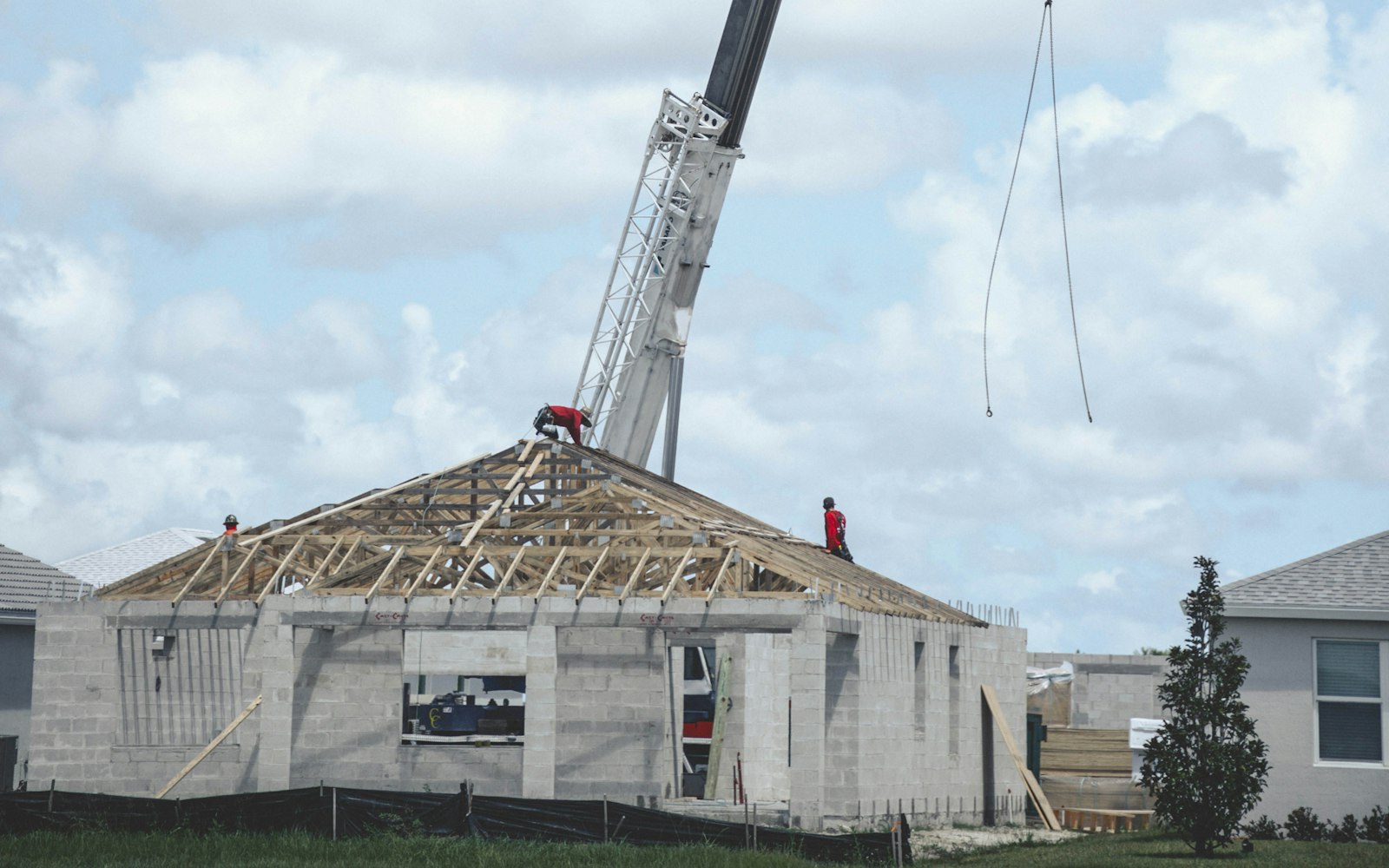
Traditional construction carries out most of the work on site, largely in sequence: foundations, then frame, then envelope, then services and finishes. Many real projects mix the two, for example by dropping factory-made bathroom pods into a conventional frame.
The distinction matters because figures quoted for “modular” often come from quite different systems.
How the two methods compare
FactorModularTraditional Where work happensMostly in a factory; site work covers foundations, connections and finishingMostly on site ScheduleFactory and site work run in parallelLargely sequential Design changesMust be fixed early; late changes are costlyCan change during construction, at a cost Cost profilePotential savings at scale; transport and cranes add costExposed to site labour, weather delays and rework Site requirementsRoad access for large loads, crane spaceSpace for materials and trades over a longer period Quality controlRepeatable factory checks; joints need on-site scrutinyDepends heavily on site supervision and labour skill Best fitRepetitive, standardised layoutsBespoke, irregular or still-evolving designs Speed: manufacturing time is not project time
Modular construction saves time because foundations and site works can proceed while the modules are being built. McKinsey’s 2019 analysis found that modular can cut schedules by 20–50 percent, a figure that comes from recent project experience.
Only part of the schedule compresses, though. Design, approvals, site preparation, transport permits, crane lifts, module connections and final commissioning all remain on the critical path. A factory with a full order book can also erase the advantage before production even starts.
Cost: construction cost vs total project cost
Cost is where marketing and evidence differ most. McKinsey sees potential for 20 percent savings at scale. It also cautions that such savings remain more the exception than the norm, and that costs can rise by up to 10 percent if logistics or materials costs outweigh labour savings. The biggest savings come on projects with the most labour-intensive work and the most repetition.
Transport is a real cost driver. A planning guide published by Washington State notes that hauling modules 16 feet wide or more costs almost four times as much as hauling units under 15 feet wide. Payments also shift towards the factory early in the project, so lenders and cash-flow plans need to reflect that. On the other side of the ledger, earlier completion can bring revenue forward, which matters for rental and commercial assets.
Design flexibility
Traditional construction tolerates indecision and modular does not. In modular projects, design freeze happens months earlier, and a delayed decision cascades through production, logistics and site work. A project should be designed as modular from the outset, rather than converted from a conventional design. Module sizes are also bound by road limits and crane capacity. Irregular sites and sculptural forms are easier to achieve on site.
Quality, durability and compliance
Factory production allows consistent conditions, repeatable checks and protection from weather. Permanent modular buildings are built to the same building codes as site-built ones, and modules are engineered to survive transport. The critical zone is where modules meet on site. Structural ties, fire-stopping, acoustic separation and weather-sealing at the joints need inspection as rigorous as anything in the factory. Approval processes also vary: some local authorities may not accept permits issued at a higher level for module interiors.
With traditional construction, quality depends more on site supervision and the skill of local trades. Well-managed sites produce excellent, long-lived buildings.
Waste and sustainability
The strongest evidence for modular is in site waste. WRAP case studies found volumetric construction can cut site waste by up to 90 percent, and precast systems by up to 50 percent. A study of seven modular projects found an average reduction in on-site construction waste of around 80 percent compared with traditional in-situ construction.
On-site waste is not the same as lifetime environmental impact. Material choice, transport distance and the building’s operational energy use often matter more over its life, so sustainability claims should be judged project by project.
When each method makes sense
Modular tends to suit:
- Hotels, student housing, affordable housing, schools and clinics, where the same unit repeats many times.
- Tight urban sites where noise and disruption must stay low.
- Regions with scarce site labour.
- Projects with a capable factory within practical haul distance.
Traditional tends to suit:
- Bespoke or irregular designs.
- Projects whose design is still evolving.
- Sites without crane or heavy-load access.
- Markets where no nearby factory capacity exists.
Hybrid approaches, such as pods, panels or precast elements within a conventional frame, often capture some benefits of each.
Developers weighing methods for residential and commercial projects should ask four questions early:
- Is the design repetitive and final?
- Is there a qualified manufacturer within transport range?
- Can the site take modules and a crane?
- Will local authorities and lenders accept the approach?
The answers will tell you more than any headline percentage. Looking at how completed developments have held up over time is useful context too, and more practical guides are available on the GFS blog.
FAQs
What is the main difference between modular and traditional construction?
Where the work happens. Modular builds three-dimensional units in a factory and assembles them on site. Traditional construction builds most of the structure in place, largely in sequence.
Is modular construction cheaper than traditional construction?
Not automatically. Savings are most likely on large, repetitive projects with a nearby factory. Transport, crane costs and late design changes can erase them. Compare total project cost, including financing and time to occupancy, rather than the build price alone.
Which method is faster?
Modular usually shortens the overall schedule, because site work and manufacturing run in parallel. Approvals, site preparation, transport and on-site connections still take time, so the saving varies a lot by project.
Are modular buildings as durable as traditional ones?
Permanent modular buildings are built to the same codes as site-built ones, and modules are engineered to withstand transport and lifting. Long-term performance depends on the quality of the on-site connections and on maintenance. Do not confuse permanent modular buildings with temporary units.
Can modular buildings be customised?
Yes, within limits. Layouts and finishes can be tailored if they are decided before production. Module sizes are constrained by transport and crane limits, and changes after manufacturing begins are expensive.
Is modular construction more sustainable?
It reliably reduces on-site waste. Overall environmental impact also depends on materials, transport distance and the building’s energy performance, so assess it project by project.